

Headaches affect millions of people daily, significantly impacting quality of life and productivity. At Queen Creek Back Care, Dr. Wayne Christensen specializes in identifying and treating the underlying causes of headaches and migraines, providing natural, drug-free relief that addresses the root problems rather than just masking symptoms.
Understanding Different Types of Headaches
Not all headaches are the same, and effective treatment requires accurate identification of your specific headache type. Dr. Wayne’s expertise in headache diagnosis ensures you receive the most appropriate treatment for your particular condition.


Common Types of Headaches We Treat:
- Tension Headaches: The most common type of headache, typically caused by muscle tension in the neck, shoulders, and head. These headaches often feel like a tight band around the head and respond excellently to chiropractic treatment.
- Cervicogenic Headaches: Headaches that originate from problems in the cervical spine (neck). These are often overlooked but represent a significant percentage of chronic headaches that can be effectively treated with spinal care.
- Migraine Headaches: Severe, often one-sided headaches that may include nausea, light sensitivity, and visual disturbances. While complex, many migraines have spinal components that respond well to chiropractic care.
- Cluster Headaches: Intense headaches that occur in patterns or clusters, often involving severe pain around one eye. Chiropractic care can help reduce frequency and intensity.
- Sinus Headaches: Headaches related to sinus congestion and pressure, which may have structural components that benefit from spinal treatment.
- Hormone-Related Headaches: Headaches related to hormonal fluctuations that may be influenced by nervous system function and spinal health.
Dr. Wayne's Comprehensive Headache Treatment Approach:
Detailed Headache Assessment: Comprehensive evaluation including headache history, triggers, patterns, associated symptoms, and physical examination to identify underlying causes.
Spinal Analysis: Detailed examination of the cervical spine and upper back, as many headaches originate from spinal dysfunction and muscle tension in these areas.
Postural Evaluation: Assessment of posture and its relationship to headache patterns, including forward head posture and upper crossed syndrome.
Trigger Identification: Working with patients to identify lifestyle, dietary, environmental, or stress-related triggers that contribute to headache occurrence.
Neurological Assessment: Evaluation of nervous system function to rule out serious conditions and identify treatable neurological components.
Specialized Headache Treatment Techniques:
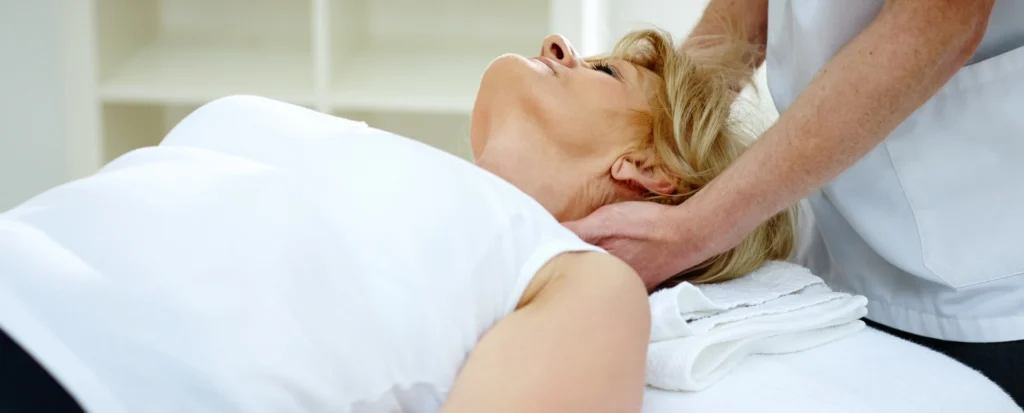
Upper Cervical Adjustments: Precise adjustments to the upper neck joints (atlas and axis) that are crucial for proper head positioning and can significantly impact headache frequency and intensity.
Cervical Spine Mobilization: Gentle techniques to restore normal movement to all cervical joints, reducing nerve irritation and muscle tension that contribute to headaches.
Suboccipital Release: Targeted treatment of the small muscles at the base of the skull that commonly become tight and contribute to tension headaches.
Trigger Point Therapy: Treatment of muscle knots and trigger points in the neck, shoulders, and head that refer pain and contribute to headache patterns.
Cranial Therapy: Gentle techniques that address cranial bone movement and help reduce intracranial pressure and tension.
Conditions and Patterns We Address:
Chronic Daily Headaches: For patients experiencing headaches most days, Dr. Wayne develops comprehensive treatment plans that address multiple contributing factors.
Weekend/Stress Headaches: Headaches that occur during periods of stress or relaxation, often related to muscle tension and stress patterns.
Computer/Work-Related Headaches: Headaches resulting from poor posture, eye strain, and neck tension from prolonged computer use or poor workplace ergonomics.
Sleep-Related Headaches: Morning headaches or those related to poor sleep quality, often connected to neck position during sleep or sleep disorders.
Exercise-Induced Headaches: Headaches that occur during or after physical activity, which may be related to spinal dysfunction or muscle imbalances.
Weather-Related Headaches: Headaches triggered by barometric pressure changes, which may be influenced by spinal function and nervous system sensitivity.
The Headache Treatment Process:
Phase 1: Assessment and Immediate Relief (Week 1) Thorough evaluation to identify headache type and contributing factors, with immediate treatment to provide relief and begin addressing underlying causes.
Phase 2: Pattern Interruption (Weeks 2-4) Intensive treatment to break chronic headache patterns and address primary spinal and muscular contributors.
Phase 3: Stabilization (Weeks 4-8) Reinforcement of improvements through continued treatment and introduction of prevention strategies and lifestyle modifications.
Phase 4: Prevention and Maintenance (Ongoing) Long-term strategies to maintain headache freedom, including potential wellness care and lifestyle management.
Lifestyle Factors in Headache Treatment:
Ergonomic Optimization: Comprehensive evaluation and modification of work environments, computer setups, and daily activities to eliminate headache triggers.
Sleep Quality Improvement: Assessment of sleep habits, pillow selection, and sleep positioning to ensure restorative rest without neck strain.
Stress Management: Techniques to address the relationship between stress and headache patterns, including relaxation strategies and lifestyle modifications.
Nutritional Guidance: Basic nutritional counseling to identify and avoid common dietary headache triggers while supporting overall health.
Exercise and Movement: Appropriate exercises to strengthen neck muscles, improve posture, and reduce headache frequency.
Advanced Headache Treatment Protocols:
Neuromuscular Re-education: Techniques to retrain proper muscle function and coordination in the neck and shoulders to prevent headache-causing tension patterns.
Breathing Pattern Correction: Assessment and correction of breathing patterns that may contribute to neck tension and headache development.
Visual System Integration: Consideration of visual stress and eye strain as headache contributors, with appropriate referrals when indicated.
Temporal Mandibular Joint (TMJ) Assessment: Evaluation of jaw function and its relationship to headache patterns, particularly for patients with jaw tension or grinding habits.
When to Seek Immediate Headache Treatment:
- Sudden onset of severe headache unlike previous headaches
- Headache with fever, stiff neck, or rash
- Headache following head injury
- Progressive worsening of headache patterns
- Headache with visual changes, weakness, or numbness
- Headaches that interfere significantly with daily activities
- Frequent headaches requiring regular medication use
Prevention Strategies:
Dr. Wayne emphasizes headache prevention through spinal health maintenance, postural improvement, stress management, and lifestyle modifications. Many patients find that regular wellness care significantly reduces headache frequency and intensity.
Measuring Treatment Success:
Progress is tracked through headache frequency, intensity, duration, and medication usage. Most patients experience significant improvement within 4-6 weeks of starting treatment, with many achieving substantial headache reduction or elimination.
Frequently Asked Questions
Research shows chiropractic care is highly effective for many types of headaches, particularly tension headaches and cervicogenic headaches, with success rates of 70-90%.
Most patients notice improvement within 2-4 treatments, with significant relief typically achieved within 6-8 visits. Chronic headache sufferers may require longer treatment periods.
Yes, many migraines have spinal components that respond well to treatment. While we can’t cure all migraines, most patients experience reduced frequency and intensity.
Generally yes, but Dr. Wayne will assess your specific situation. Gentle techniques are often very effective for providing immediate headache relief.
Tension headaches typically feel like pressure or tightness, while migraines are often one-sided, throbbing, and may include nausea and light sensitivity.
Absolutely. Forward head posture and rounded shoulders create muscle tension and spinal dysfunction that commonly lead to headaches.
Dr. Wayne works with you and your physician regarding medications. Many patients naturally reduce medication use as their headaches improve with treatment.
Cervicogenic headaches often start at the base of the skull, may be one-sided, and are often accompanied by neck pain or stiffness.
Yes, stress commonly causes muscle tension in the neck and shoulders, leading to tension headaches. Treatment often includes stress management strategies.
Dr. Wayne provides specific recommendations including posture exercises, stress management techniques, ergonomic improvements, and trigger avoidance strategies.